

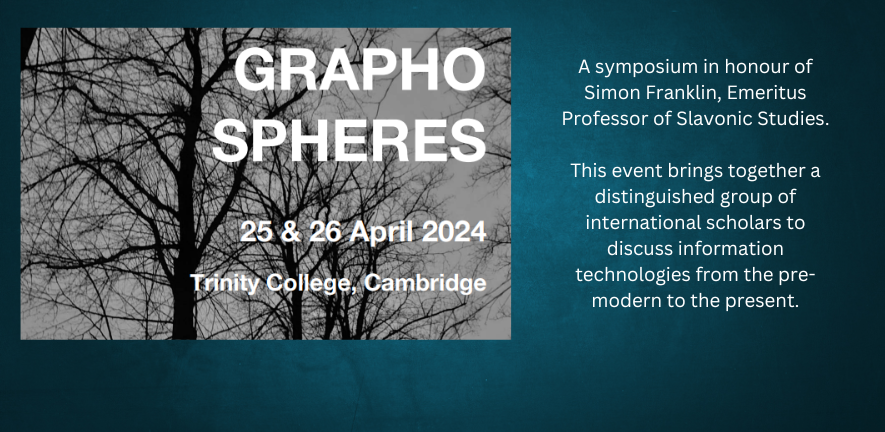
Graphospheres Symposium, 25–26 April 2024
26 April 2024
Graphospheres is a celebration in honour of Simon Franklin, Emeritus Professor of Slavonic Studies at the University of Cambridge. The symposium brings together a distinguished group of international scholars to discuss information technologies from the pre-modern to the present.
QS World Rankings by Subject 2024
17 April 2024
We are delighted to share that the University of Cambridge ranked 1st for Modern Languages and 2nd for Linguistics in the QS World University Rankings for 2024 (as indeed was also the case in 2023). At MMLL we strive to excel across the disciplines we teach and take the needs and outcomes of our students very seriously...
Ioanna Sitaridou leads 'last chance' effort to preserve living relative of ancient Greek
3 April 2024
Romeyka descends from Hellenistic Greek not Medieval Greek, making it a sister, rather than a daughter, of Modern Greek.
Postgraduate student wins Association for the Study of Modern and Contemporary France paper prize
25 March 2024
We are proud to share that Ry Montgomery has just won the ASMCF Postgraduate Paper Prize for their paper, 'Sous les pavés, le Souk: reframing (re)public(an) space in the cinema of Lionel Soukaz’.
© 2024 University of Cambridge